FoulingCure
Saving time and energy

E.ON Denmark, Heat Pump / Sewage water
E.ON Danmark group produces and supplies electricity, gas and heat in Denmark. E.ON also has one of the country's largest networks of charging stations for electric cars and opened the first of a series of gas filling stations.
E.ON also produces district heating for households.
The main contractor of the project is Aalborg CSP
The project is a complete heat pump with associated plate heat exchanger, pipes and purification system, which intends to take the energy out of the sewage water, before it is discharged into Roskilde Fjord.
The heat pump uses ammonia as a coolant and have a performance of approx. 2,5MW with a yearly capacity of 13.500MWh.
equivalent to 750 house holds, and reducing CO2 emisson with 2.000 tons per year.
Sewage water temperature varies throughout the year; The plan is to extract 7° C from the water.
The heat pump increases the temperature to 70° C and sent it directly into the district heating system.
FoulingCure ensures a clean plate heat exchanger in order to maintain a high COP value for the consumers to get the most possible MWh of district heating from the MWh of power supplied to the heat pump.
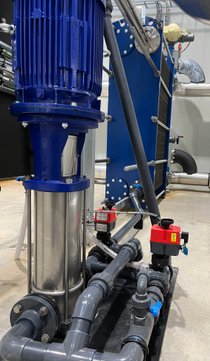
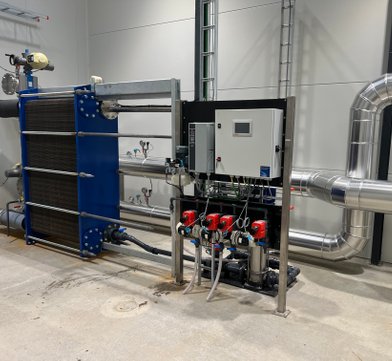
Egedal Fjernvarme Denmark, Heat Pump / Sewage water - Under construction 2024
The new heat pump makes it possible for Egedal Fjernvarme to utilize energy from the sewage water in Stenløse Treatment Plant for heat in the district heating network.
The heat pump ensure sufficient heating capacity to supply both current and future district heating customers with a maximum performance of approx. 1,5MW
In Stenløse, the heat pump extracts the energy from the sewage water before discharging into Stenløse river. The low-temperature energy from the sewage water is subsequently converted into 75 °C via the heat pump.
FoulingCure cleans two plate heat exchangers in order to maintain a high COP value for the heat pump.
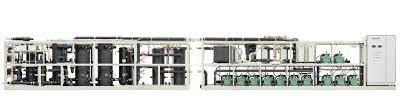
Odsherred Forsyning Denmark, Heat Pump / Sewage water
The new heat pump makes it possible for Odsherred Forsyning to utilize the energy in the sewage water for the district heating network in Fårevejle.
"With us, it will be a 1.5 MW water-to-water heat pump, which will especially benefit in winter - because the waste water's constant temperature of 8-10 degrees is a significantly better source of heat than the cold outside air" explains Fanny Villadsen.
Contractor of the project is Tjæreborg Industries
FoulingCure cleans the plate heat exchanger in order to maintain a high COP value for the heat pump.

"The heat exchanger runnning sewage water for the heat pump will have a FoulingCure self-cleaner system - This will solve the maintenance problems that experience shows on this type of plant elsewhere."
Fanny Villadsen
CEO, Odsherred Forsysning
King Fish Zeeland Holland, Landbased Fish Farming RAS Energy Recovery - Installed 2022
The Kingfish Company is a first-mover in technology driven re circulation aquaculture system for Yellowtail Kingfish with an aim is to be the market leader in the sustainable production of high value Marine Seafood. 1st site is located in the Netherlands with full cycle hatchery, an on site R&D facility, and an advanced grow-out system; and a 2nd site in development in Jonesport Maine for the US market
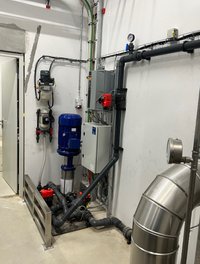
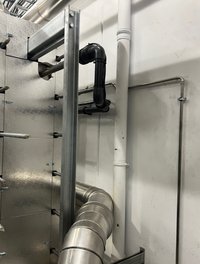
The outgoing Waste water heat recovery system for 1 production unit includes 10plate heat exchanger with an maximum installed capacity of 2,5MW. The recovered energy is re-directed to the intake of Sea water going to the fish tanks.
Natural bacteria growth – bio fouling - are found in the re-circulated fish water resulting in clogging of the exchangers. In fact, after 1-2 weeks without cleaning, the performance is down by 80-90%.
An installed gas burner was complimenting the missing energy recovery.
The FoulingCuresystem was installed - after a year of operation, the plate heat exchangers performance is close to 97%.
18 FoulingCure systems has been installed
Payback time < 5 months
"We used to manually open and clean our plate heat exchangers for heat recovery once a week – a full time job for an operator. The fouling leading to clogging, lack of performance and insufficient heat recovery
After installing FoulingCure, we automatically rinse and backflush the heat exchangers every 15 minutes. The results are much better performance with no need for manual opening up for cleaning"
Christiaan de Wet
Head of Design and Engineering, The King Fish Company
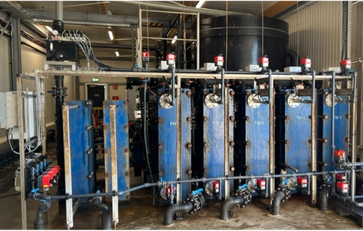
Scottish Salmon Company (Bakkafrost) UK, RAS - Energy Recovery - Installed 2022
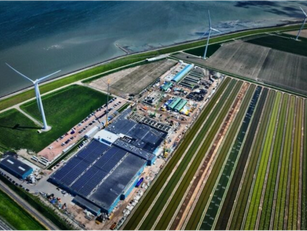
Scottish is a salmon smolt facility with state of the art re circulation aquaculture system.
RAS technology is an indoor land based aquaculture system which allows fish to be reared for longer in freshwater tanks before being moved to marine sites. Greater control of the freshwater rearing environment means that farmers can produce larger smolt (juvenile salmon), reducing the marine production cycle which in turn cuts down the biological risk of rearing in the marine environment
Natural bacteria growth – bio fouling - are found in the re-circulated fish water resulting in clogging of the exchangers.
After a two weeks without cleaning, the energy recovery were reduced 30% and cleaning were required
Cleaning the plate heat exchangers were done manually by opening up the exchangers.
One FoulingCure systems were installed as a trial and 6 systems more have been ordered.
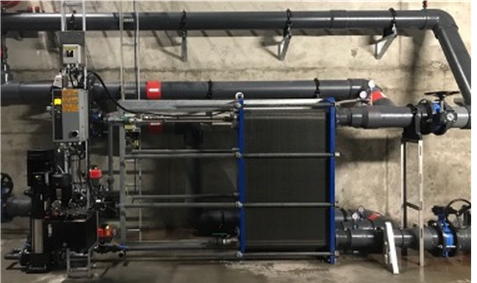
Tytlandsvik Aqua Norway , Salmon Landbased Fish Farming RAS , Cooling - Installed 2022
Tytlandsvik Aqua is a salmon smolt facility with state of the art re circulation aquaculture system. The plan is to become the leading smolt producers with a capacity of 4500 tons “large smolt”. Larger smolt reduces the grow out period in the ocean from 22 months to 10 months. This double the ocean grow out capacity without further environmental impact.
The fish tanks are cooled via plate heat exchangers using 8°C water from 100m depth in the nearby Fjord.
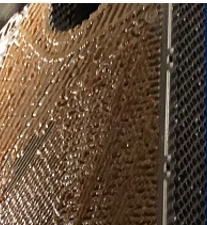
Natural bacteria growth – bio fouling - are found in the re-circulated fish water resulting in clogging of the heat exchangers. After 1-2 weeks without cleaning, the cooling is down below required capacity.
Tytlandsvik Aqua do not use chemical CIP in order to minimize any risk for contamination of the RAS water.
Cleaning of plate heat exchangers were done manually by opening up the exchangers every 2nd week.
Two FoulingCure systems were installed as a trial to increase the cooling capacity and reduce man power cost.
”Fouling in the heat exchangers was leading to reduced cooling capacity.
In order to minimize risk of contamination, we chose not to use chemicals - we opened and cleaned the exchangers every second week..
After installing FoulingCure, the system automatically rinse and backflush the heat exchangers every 15 minutes. The results are good - now running for over 6 months with full cooling performance and we have no need for manual cleaning"
Jone Sedberg
Head of Engineering, Tytlandvik Aqua
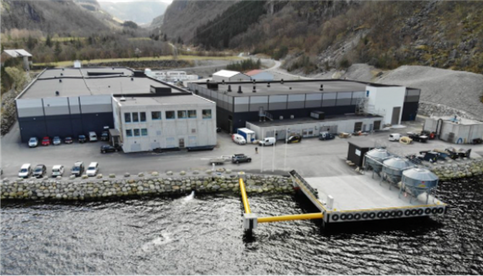
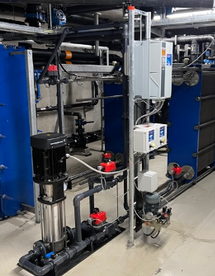
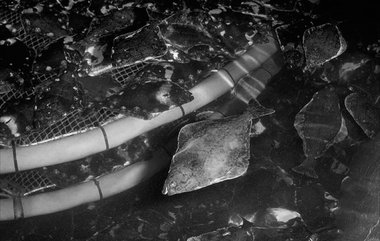
Sterling White Halitbut Norway, Landbased Fish Farming RAS, Installed 2023
Sterling White Halibut AS are the world leader of farmed halibut with headquarter in Hjelmeland, Norway.
Their production facilities are dotted along the Norwegian coast, with a hatchery in Rørvik, Trøndelag, a growing facility in Vindafjord, Rogaland, and sea facilities in Hjelmeland.
SterlingWhit Halibut deliver 1.5 million kilos of premium Sterling ® halibut to discerning customers all over the world. Their biggest markets are Norway, UK, Sweden, US, Be-Ne-Lux, and Germany.
From eggs to 1500 grams the halibuts are farmed in landbased fish tanks. After they are transported to sea facilities where they stay for 2 - 2.5 years, until they reach 4 - 5 kilos and are ready to be harvested.
The fish tanks are temperature regulated via plate heat exchangers from cooling/heating pumps.
The challenges is the natural bacteria growth – bio fouling - are found in the re-circulated fish water resulting in clogging of the heat exchangers. After a few weeks without cleaning, the capacity is down.
Two FoulingCure systems are installed to avoid the loss of cooling/heating capacity and to reduce the man power cost for traditional cleaning.
Breda Court House, Holland - HVAC Cooling / Heating Pump, Installed 2023
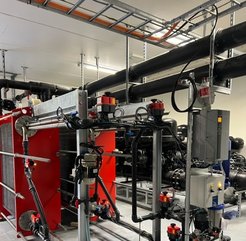
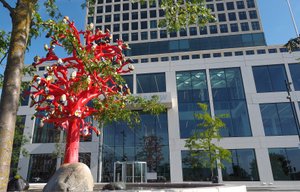
The new built court house from 2018 is using canal water for cooling/heating the HVAC system in the building.
The canal water kept building up fouling (bio & particles) in the 1 MW heat exchanger for the heat pump.
The COP value for the heat pump were significant reduced and every 3 months, the heat exchanger had to be opened for a service.
FoulingCure system with BackFlush application were installed.
The FoulingCure system is running 7 minutes every 1 hour and has kept the heat exchanger clean from fouling.
District Heating Plant, Denmark, Flue Gas Condensation Energy Recovery - Installed 2020
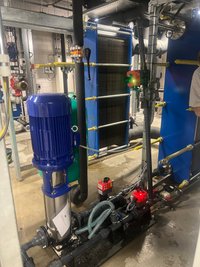
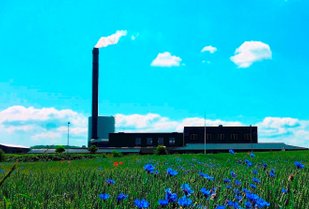
This district heating company supplies heating and hot water to a community of approx. 8,200 households and businesses. The plant has two biomass boilers, each with a nominal capacity of 15 MWh and it is equipped with a heat recovery system based on flue gas condensation. Via a plate heat exchanger, the recovered energy is re-directed into the heating supply system.
Despite cyclones and filters, particles and bacteria are found in the condensate. In fact, data showed fouling reduced the heat recovery significantly. After 24 weeks, performance was down by 15%. Further, the data showed that the total energy loss due to fouling was 3,077 MWh per year.
A FoulingCure system was installed, and after 20 weeks of operation, no fouling was detected in the plate heat exchanger for heat recovery. Performance was close to 100%.
Potential annual heat recovery: 3,077 MWh
Potential annual savings, primary energy: approx. 66,000 EUR = 80,000 USD.
Additionally, the plate heat exchanger no longer needs full service once a year.
Annual savings, service: approx. 16,000 EUR = 20,000 USD.
Annual operational savings: 82,000 EUR = 100,000 USD.
"We used to manually backflush our plate heat exchangers for heat recovery from the flue gas twice a day – still having fouling problems leading to a full-service check once a year. After installing FoulingCure, we automatically rinse and backflush the heat exchangers every second hour. The results are no fouling and no need for the yearly full-service check."
Robert Brodersen
Production Manager at Aabenraa-Rodekro District Heating Company
Energnisten Esbjerg Denmark, Power & District Heating Plant , Flue Gas Condensation - 2022
Waste burning Power plant with a capacity of 215.000 tons/year.
Producing 460.000 MWh heat and 150.000MWh electricity
– equals consumption at 25.500 households
The boiler is equipped with a heat recovery scrubber system / flue gas condensation. Via a plate heat exchanger, the recovered energy is re-directed into the district heating system.
Despite filters, fouling has been detected in the condensate system. Data showed fouling reducing the heat recovery with 7%.
As a trial for recovering a dirty exchanger, a FoulingCuresystem was installed without making a full service of the plate heat exchanger. After running non-stop for 2 weeks and a CIP, the heat recovery went up from 93% to 98%
= 1MWh extra output
Estimate Payback < 5 months
"We have had a stable output in MW from the flue gas condensate system over years.
FoulingCure presented an analysis and we realized that fouling has been a problem for some time due to graduate lowered return temperature in the the district heating water.
We should expect higher output from the condensate system.
A FoulingCure system was installed in our exchanger and after two months, we have already seen improved performance and looking forward to see max potential over the winter season”
Jan Fletcher
Production Manager Energnisten Esbjerg, DK
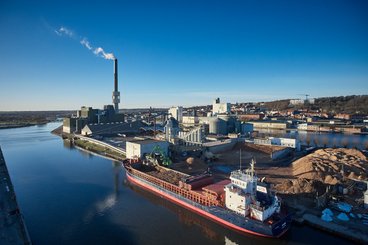
Power and District Heating Plant, Flue Gas Condensation, Energy Recovery - Installed 2020
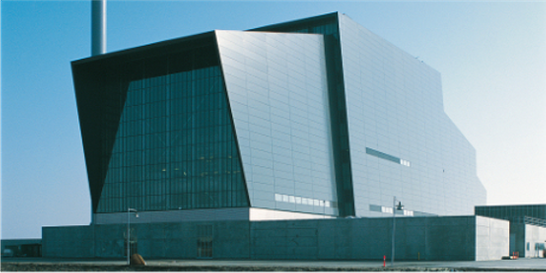
The district heating company supplies heating and hot water to a community of approx. 36,000 households and businesses. The plant has two biomass boilers, each with a nominal capacity of 95 MWh. Flue gas condensate is used as fluid in the plate heat exchangers – to optimize heat production and primary energy consumption.
Despite electrostatic precipitators in the flue gas system, particles accumulate in the condensate and settle in heat exchangers. Data showed that fouling reduced the heat recovery after only six weeks of operation. After 16 weeks, performance was down by 10%, and after 20 weeks by 15%. Calculations revealed that the total energy loss due to fouling was 12,000 MWh per year.
Potential annual heat recovery: 12,000 MWh
The foulingCure application was installed, and the performance of the plate heat exchanger was monitored on a weekly basis. After 16 weeks, data showed that fouling had occurred, resulting in a heat transfer reduction of 5%. Further inspections and analyses were carried out. There was still fouling in the form of bacteria growth settling on the plates. After 24 weeks, performance was down by 9%.
CIP with disinfectants was carried out in combination with a FoulingCure flushing for 30 minutes. Within 24 hours the plate heat exchanger was back at 100% performance.
Annual operational savings: 404,000 EUR = 476,000 USD
Contact us for further information